Moments of Belonging: A Legacy Built One Child at a Time
Moments of Belonging: The Value of Hands-On Learning in a High-Tech World
As Childpeace celebrates 50 years, we are reflecting on five decades of educators, students, and families who have shaped our community since 1976. This story is part of our Stories of Belonging project, highlighting how we help children belong to themselves, to others, and to their community.
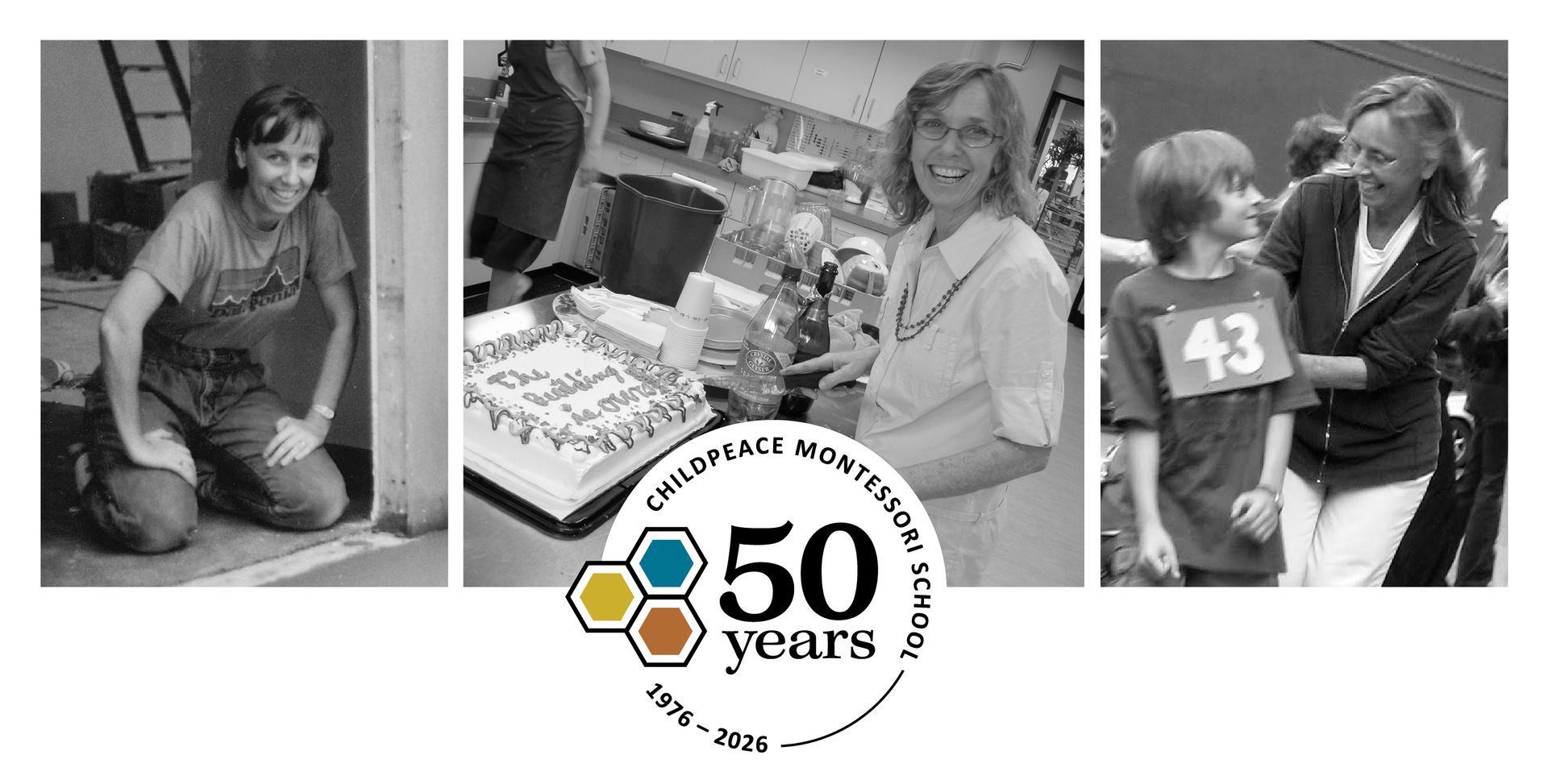
When Sue Pritzker moved to Portland in the late 1980s with her 16-month-old daughter, she wasn't necessarily looking for a career. Instead, she was simply looking for the right school for her child. Though she was already an experienced Montessori primary guide who had worked in Bay Area schools, her goal in Portland was purely personal. After observing a remarkably skilled teacher in a small toddler classroom, she enrolled her daughter at Childpeace.
It didn't take long, however, for the school’s potential—and its opportunity for strategic guidance—to become clear. As she connected with board members and office staff, Sue began lending her administrative and pedagogical expertise. She initially stepped in as a volunteer, working alongside school leaders to help establish strong operational and educational systems.
In 1987, Sue became Head of School. At the time, Childpeace served between 40 and 45 students on the second floor of the downtown YWCA. Over the next 33 years, Sue would guide the institution through major physical moves, program expansions, and a deep commitment to educational excellence, helping it grow into a Toddler through 8th Grade community recognized by Association Montessori Internationale (AMI) and accredited by the Western Association of Schools and Colleges (WASC).
Planting Roots in the City
Childpeace's history is inextricably linked with the evolution of Portland itself. Soon after Sue became Head of School, the YWCA issued notice that it needed the space, requiring the school to find a new home with virtually no reserve funds. The search led them to 105 NW Park Avenue on the North Park Blocks.
While the neighborhood faced significant urban challenges at the time, the community rallied. Parents and supporters raised $17,000 in pledges to begin the move, and building owner Richard Hass stepped in to help fund essential renovations. Childpeace would remain on the North Park Blocks for 16 years, becoming an active, vital partner in the neighborhood’s revitalization.
"We were a very public school," Sue recalls. Efforts had to be made to accommodate the children being outside the school and in the urban community. The school entered a formal contract with the city to clean the play area every morning before students arrived, worked directly with civic leaders in 1993 to redevelop the park block, and built lasting ties with local neighborhood businesses. Through daily walks and presence, Childpeace integrated itself into the fabric of the downtown community.
Innovation and Unity
As the school’s reputation for authentic Montessori practice grew, so did demand from families wanting to extend their children's journey. The school responded with thoughtful innovation. In 1999, Childpeace established the Terrace program at Mount St. Joseph, creating a pioneering intergenerational classroom where young children and senior residents connected through daily activities.
Shortly after, in 2000, parents urged the school to expand into elementary education. After operating temporarily in the Hannah Anderson building on Flanders Street—and aided by a transformative $750,000 donor gift that also launched the school's tuition assistance funding—Childpeace purchased its permanent 40,000-square-foot main campus on Thurman Street in 2007.
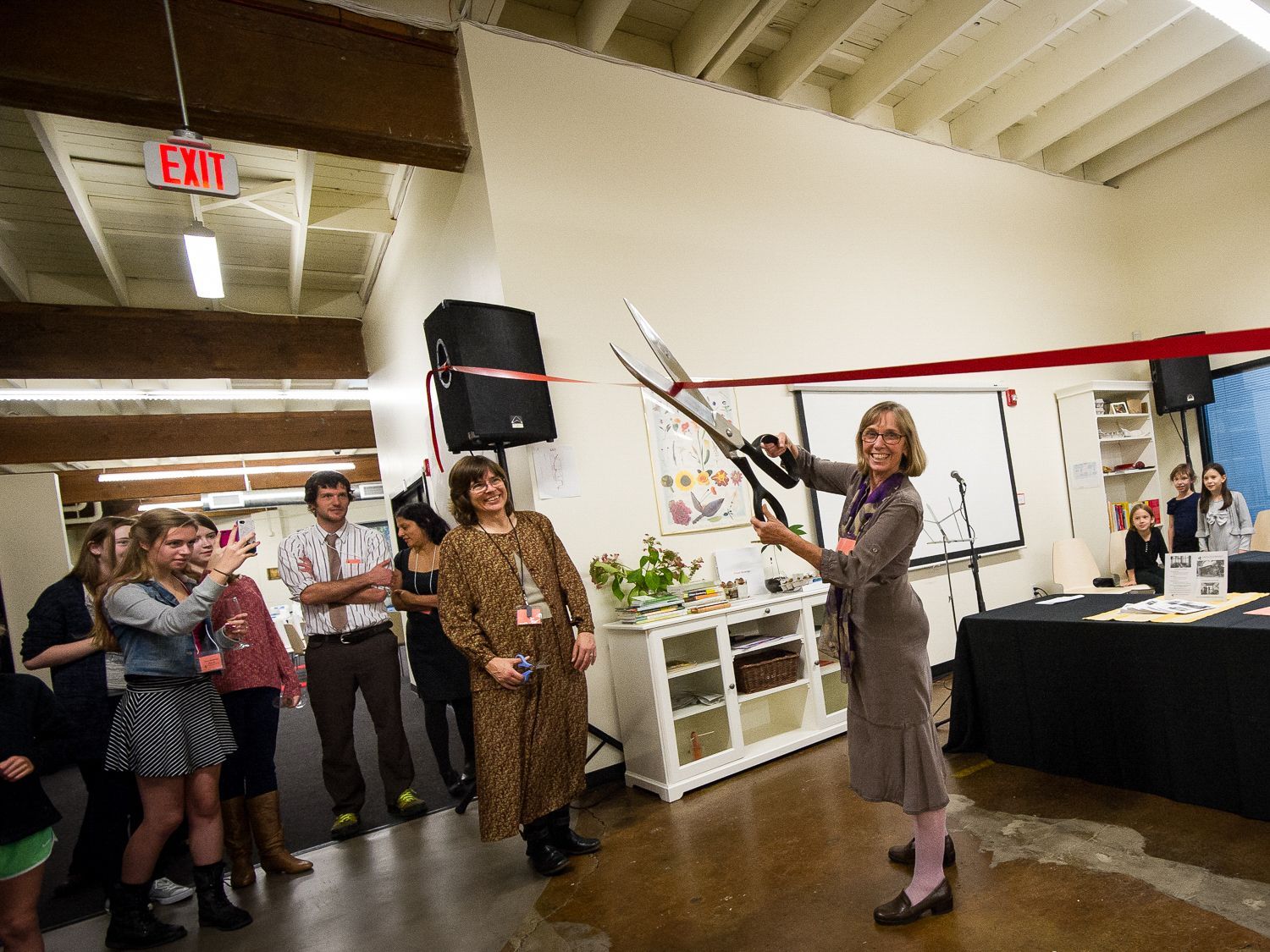
For Sue, the board, and the school community of parents, uniting the Toddler, Children's House, and Elementary programs under one roof realized a long-held dream. Two years later, the school founded Metro Montessori to serve adolescents; it was originally housed in the main building but, in 2012, purchased the current Metro Montessori building with a refinance of the main building. This created the continuum through 8th grade.
A Culture Guided by Montessori Principles
Throughout 33 years of expansion, the school’s leadership philosophy remained anchored in the very principles taught in the classroom: patience, community collaboration, and transparent communication.
"Our mantra was: ‘We try not to sweep anything under the carpet,’" Sue explains. Communication has to be clear and consistent. “If there are hard things to manage, it is best to acknowledge it.”
Sue prioritized supporting the staff and maintaining high pedagogical standards, fiercely protecting the school's AMI benchmark. By taking care of the educators who delivered quality instruction, the classroom environments naturally flourished.
The Human Impact of Childpeace
When asked what defines a Childpeace graduate, Sue points to the quiet confidence and resilience that develops when children spend years in an environment rooted in trust.
"They really have a sense of place," Sue says. "They learn to trust adults and go to the person who can help them because that’s what they experienced. They aren't afraid to make mistakes—they just keep going."
Reflecting on Childpeace’s 50th anniversary, Sue emphasizes that the school’s 50-year story isn't the work of a single leader, but the collective care of generations of teachers, parents, and board members who chose to invest in a vision.
"With all the growth and challenges we had to navigate, we stayed focused on every single child's experience," Sue reflects. "That's how we built the school’s nurturing culture—one child at a time."