Montessori at Home — Preparing Your Environment to Promote Independence
Montessori at Home — Preparing Your Environment to Promote Independence
Now that the school is out for the summer, you may be looking for ways to continue the routines and practices of your child’s classroom. Embracing the Montessori method at home starts with preparing your environment so that your child can act independently and contribute to home activities. Drawing from 50 years of experience at Childpeace Montessori School, we encourage you to create simplified, intentional spaces at home – such as the kitchen, bedrooms, and family areas – to support your child's independence. With your support and a prepared environment, your children can learn to care for and value these spaces.
- Prepare a kitchen drawer or cabinet that your child can access, stocked with drinking glasses, dinnerware, and groceries. This allows them to independently make choices and responsibly return the items to their proper place.
- Consider the size and location of some kitchen furniture. Placing a stool at the countertop allows participation in cooking or cleaning in the kitchen. Also, if possible, add a child-sized table and chair where they can sit to eat and help with household tasks.
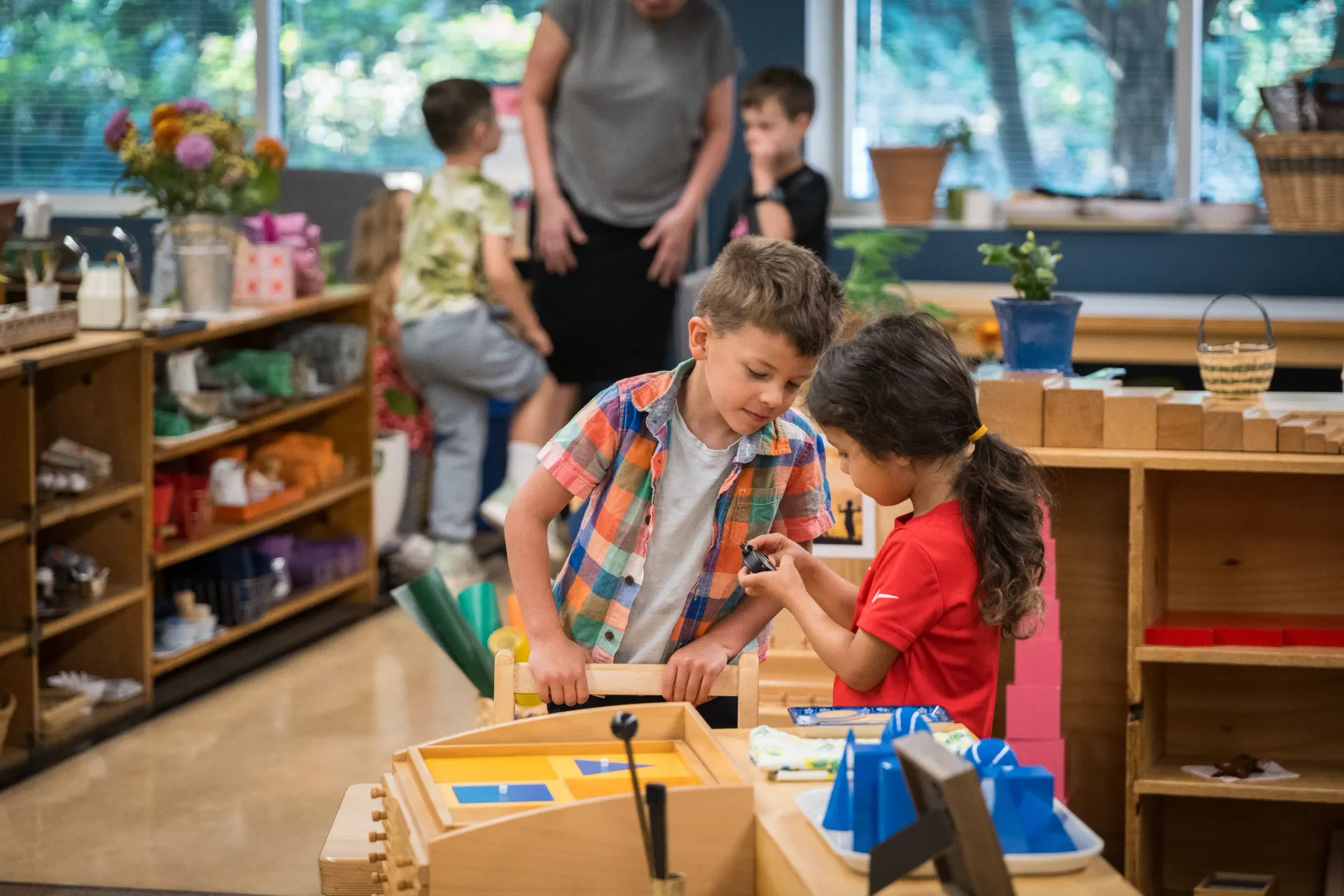
- In playrooms or bedrooms, we suggest easy-access toy storage. Using open shelves at your child’s eye level allows them to see what’s available and encourages them to return items to their rightful places. See-through bins or baskets on shelves to sort smaller items by type will also help.
- You may also consider limiting toy choices to maintain interest over time. Once you suspect interest in a toy is fading, swap it out with a toy that has been stored away.
- Set up your child’s closet with accessible shelves and low-hanging clothes. Consider providing limited options and allowing your child to make their own clothing choices. Having an accessible bedroom closet will nurture independence and confidence. It also encourages children to clean up and organize their belongings.
- For adolescents, ownership and expression are important in the bedroom space. Consider allowing your adolescent to decorate, paint, or choose furniture. Organization should also be a priority to encourage tidiness and care of their environment. Ideally, the adolescent should be solely responsible for maintaining their space. A distraction and clutter-free space is crucial for focused homework.
“To assist a child, we must provide him with an environment which will enable him to develop freely.”
-Dr. Maria Montessori
A properly prepared home environment is one that provides essential tools to support your child’s sense of independence and ability to practice real-life skills. Listed below are some ideas of things to include in your environments that will aid your child’s independence.
In the living spaces:
- Plants to care for
- Low hook to hang coats and hats
- Child-sized table and chairs
- Child-sized cleaning tools
In the bedroom:
- Accessible shelving with ample space and bins
- A comfortable reading corner with books
- Low-to-the-ground bed
- Child-sized table and chairs
- Art hung at child’s eye level
- Full-length mirror with a comb stored nearby
- Accessible clothes storage
- A bin for socks
In the bathroom:
- Step stool to reach the sink
- Accessible tissues and towel rack
- Small cup to store toothbrush & toothpaste
In the kitchen:
- Child’s apron
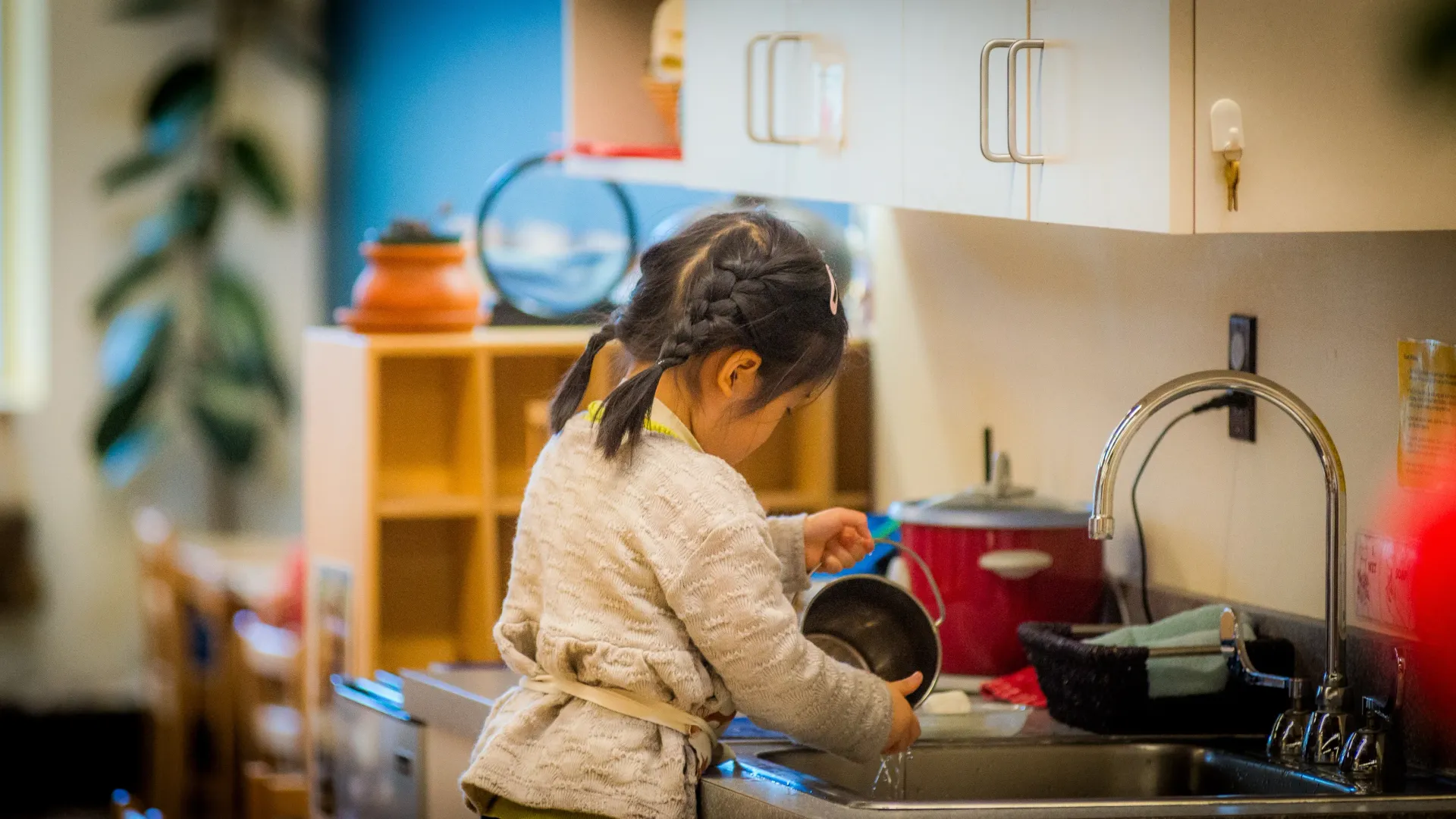
- Step stool to reach the sink
- Bowl or bucket, towels, and a sponge for spills
- A small pitcher for serving water and milk
- Dishes, utensils, and linens for setting the table
- Child-sized table and chairs
- Accessible water and allowed snacks
Once the home environment has been carefully prepared, it enables children to participate effectively in activities at home. The Montessori method emphasizes that children become capable through work and creativity, not just playing with toys. To get started, identify some age-appropriate activities and show your child the step-by-step process in a clear and simple way. Give them plenty of time to work at their own pace and break tasks down into small steps if necessary. Listed below are some ideas for home activities to include your child in.
Try these kitchen tasks:
- Setting the table for mealtime
- Clearing the table after a meal
- Scrubbing and peeling vegetables
- Preparing meals
- Unloading groceries
- Arranging flowers in a vase
- Washing and drying dishes
- Cleaning up spills
Try these other tasks around the house:
- Making beds
- Folding clean laundry
- Sorting clean socks
- Hanging up wet laundry
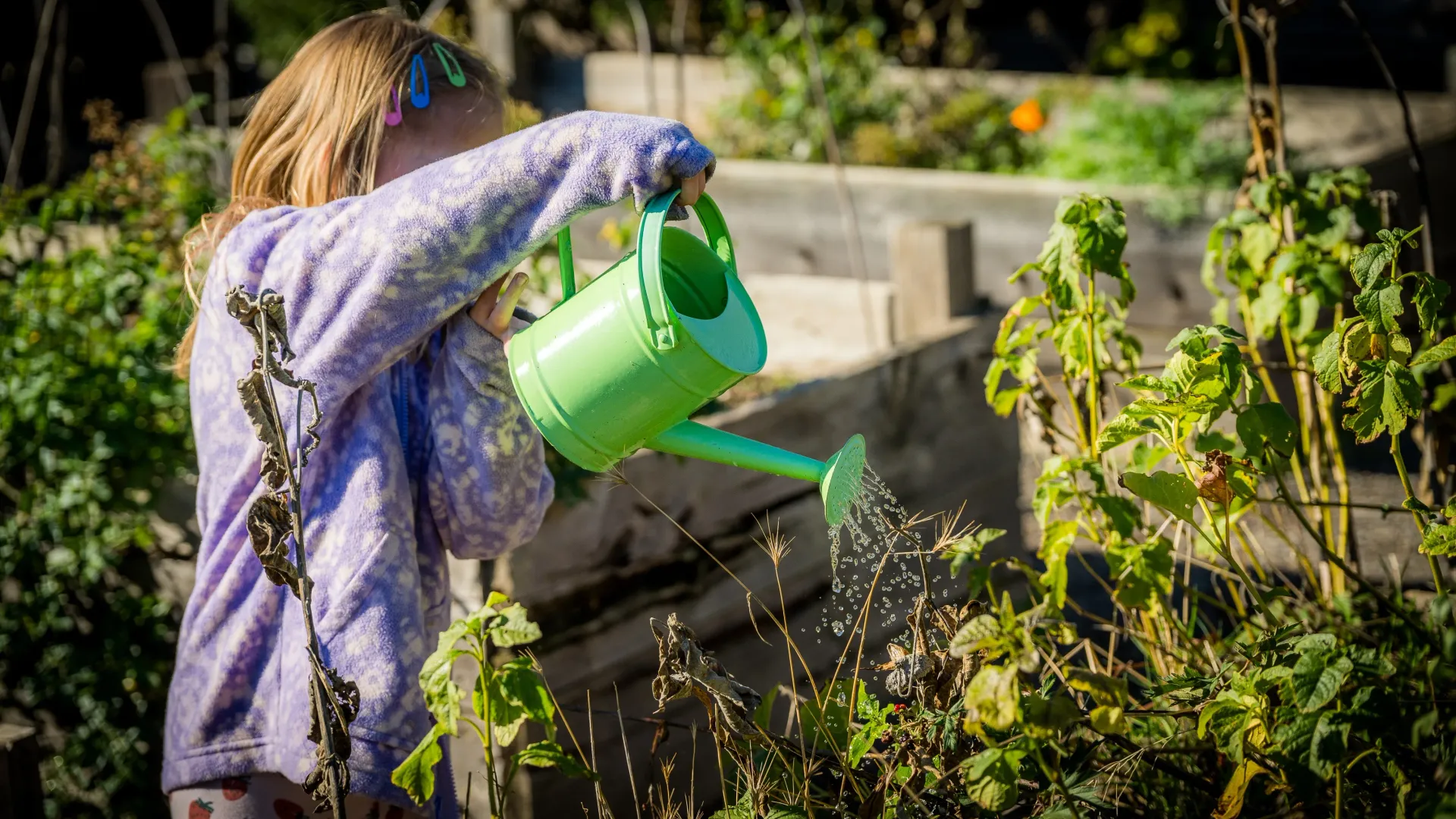
- Watering plants and cleaning the leaves
- Dusting around the house
- Polishing silver or brass
Take it outside:
- Raking leaves
- Watering plants
- Dusting sidewalks and pathways
- Planting & weeding
Providing a properly prepared home environment and allowing your child to make their own choices are essential to supporting your child’s sense of independence and ability to take care of their needs step by step as their skills develop. Be sure to include children in the day-to-day activities of the home and encourage them to practice real-life skills.
“The environment must be rich in motives which lend interest to activity and invite the child to conduct his own experiences.”
-Dr. Maria Montessori