How Montessori Schools Build Confident Readers, Writers, and Spellers
Building Strong Literacy Foundations through Hands-On Learning
By Barbara Beachley, Interim Head of School, Childpeace Montessori School
In a Montessori environment, literacy is not an isolated subject, but rather an integral part of a child’s
whole-child journey. The Montessori approach to language recognizes that strong literacy skills grow over time through listening, speaking, movement, and meaningful work.
Rather than relying on "one-size-fits-all" instruction or rote memorization, our curriculum aligns with a child’s natural developmental stages. The goal is to ensure children encounter language in ways that are purposeful, joyful, and deeply connected to their own internal drive to communicate.
The Foundation: Hands-On Language Materials
In the early years, Montessori classrooms immerse children in rich oral language and storytelling. As children demonstrate readiness, they transition to tactile Montessori materials that allow them to explore sounds and symbols through multisensory learning, engaging their hands as well as their minds:
- Sandpaper Letters: These help children connect muscular memory to the shape of a letter and its corresponding phonetic sound.
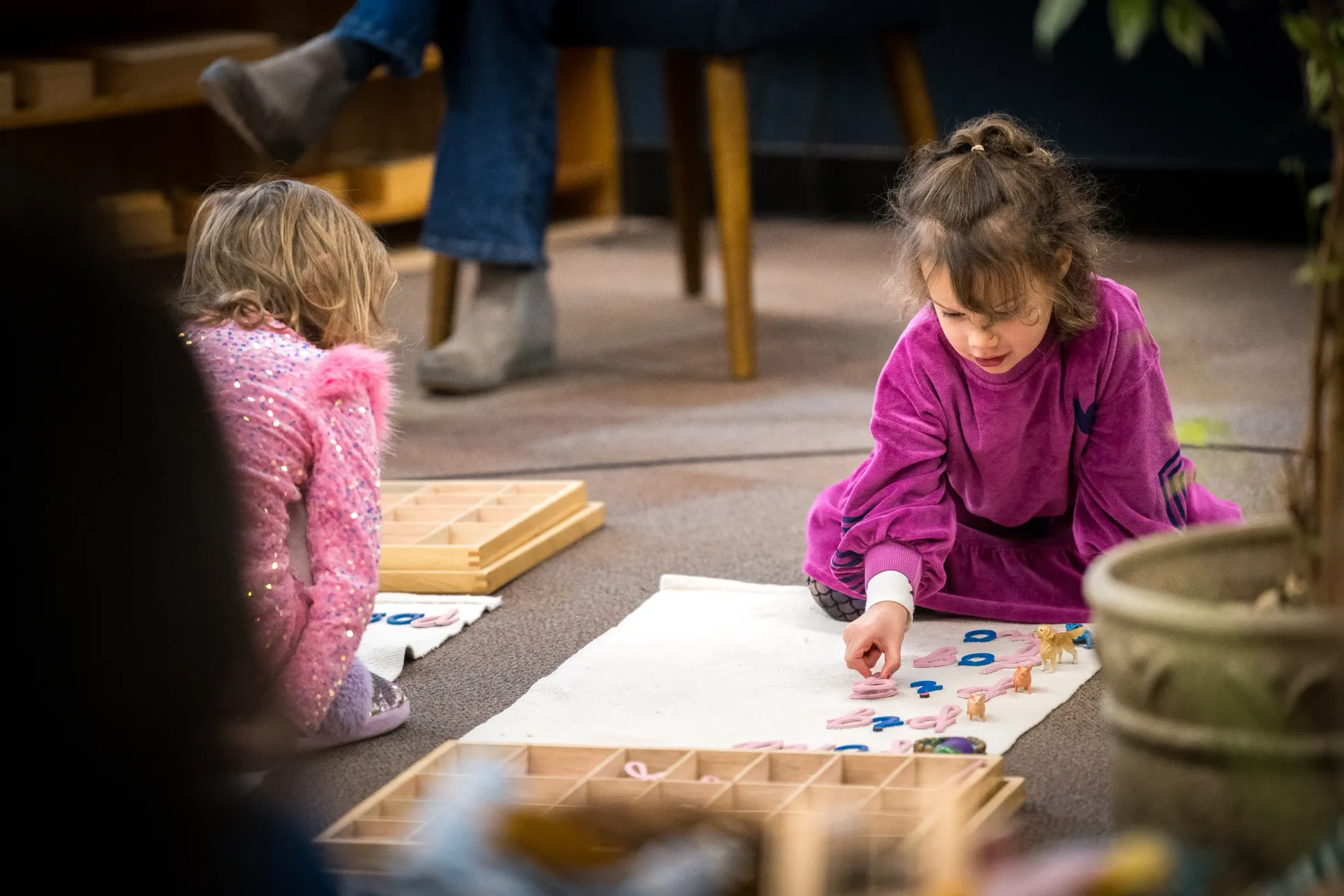
- The Moveable Alphabet: A cornerstone of the Montessori classroom that allows children to "write" and express complex ideas before they have developed the fine motor stamina for a pencil.
- Metal Insets: Artistic exercises that refine the pincer grip and prepare the hand for the physical act of writing.
The Sequence: Why Writing Often Comes Before Reading
A defining feature of Montessori literacy is that children often learn to write before they read. By learning to isolate individual sounds (phonemic awareness) and build words (encoding), children develop the underlying logic of language.
This progression aligns closely with the
Science of Reading, which emphasizes a structured, phonics-based approach. By "encoding" (building) words first, children develop the skills that make "decoding" (reading) a natural, successful discovery rather than a frustrating chore.
Spelling as a Natural Progression
As children begin writing, they often represent words phonetically—writing exactly what they hear. This "invented spelling" is a vital milestone that shows a growing awareness of language structure.
- Scaffolded Lessons: As reading fluency increases, Montessori teachers (known as Guides) offer gentle lessons on spelling patterns, conventions, and exceptions.
- Early Identification: Montessori educators are trained to observe each child closely, enabling early identification of literacy-based learning challenges. This ensures that children who experience difficulties such as dyslexia receive effective, evidence-based support within the classroom environment.
Resources for Families
- The Research: The Montessori Method of Teaching Reading and Writing: A Guide for Parents
- Learning Support: How Montessori Supports Students with Dyslexia
FAQ
Q: Is Montessori aligned with the science of reading?
A: Yes. The Montessori method uses a structured literacy approach that focuses on phonemic awareness and systematic phonics through tactile tools like Sandpaper Letters, which is highly consistent with current Science of Reading research.
Q: How does Montessori support students with dyslexia?
A: Because the Montessori approach is multi-sensory and individualized, it is often very effective for students with dyslexia. Childpeace also uses early screening tools and provides evidence-based support to ensure every child becomes a confident reader.
Q: What is the Moveable Alphabet used for?
A: The Moveable Alphabet allows children to build words and express thoughts by placing wooden or plastic letters on a rug. It separates the cognitive act of "writing" from the physical act of handwriting, allowing literacy to flourish early.